Tattoo artist wears clean, single-use disposable gloves.
Getting a tattoo or permanent makeup service, such as microblading or eyeliner tattoos, comes with health risks, like hepatitis and skin infections. Before you get these services, take the time to look around and ask the artist or studio staff questions. This guide can help.
What studios must do
Here is what you can expect at a clean and safe tattoo or permanent makeup studio:
Clean and safe environment
- The studio must be clean and in good repair, with smooth, cleanable equipment and surfaces.
- Single-use barriers must cover equipment and surfaces that have contact with clients.
- There is a dedicated service area that is separate from all other areas of the business or home.
- No smoking, drinking, eating, or pets are allowed in the service area.
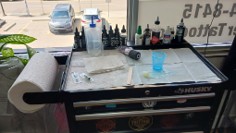
Studio with a clean surface and organized supplies.
Credit: Safe Healthy Environments
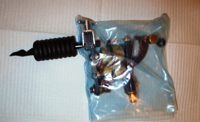
Single-use barrier over a tattoo machine.
Credit: Safe Healthy Environments
Safe equipment and infection control
- The studio must use sterile, single-use tattoo needles, blades, and other sharps.
- Tattoo tubes and microblading handles must be sterile (clean and free of germs). They must be either single-use and disposable, or reusable and properly cleaned and sterilized.
- Equipment in sterile packaging is always opened in front of you, right before your service.
Health and safety information
- The studio must give you written and verbal aftercare instructions for healing your tattoo or makeup.
- The studio must be able to show you their most recent health inspection report (usually within the past 24 months) before they start your service. Or you should be able to
look up the health inspection report online.
If the studio doesn’t have a health inspection report,
do not get the service. Contact a
public health inspector if you have any concerns.
What providers must do
During the service, here are the health and safety measures the artist or service provider must follow.
Clean hands and clothing
The artist or service provider must:
- Wash their hands very well with soap and water before starting your tattoo or service.
- Wear single-use disposable gloves while working on you.
- Wash their hands (or use hand sanitizer) and put on new gloves before continuing to work on your skin if they stop to do anything else.
- Wear clean clothing.
Safe tools and infection prevention
The artist or service provider must:
- Use single-use disposable ink caps so needles cannot be put into ink bottles.
- Use clean gloves or wooden sticks to take gel or cream from containers.
- Clean your skin with an antiseptic (germ-killing) solution before starting your tattoo or makeup.
- Dispose of needles and sharps in a puncture-resistant biohazard container (also called a sharps container), like the red or yellow ones in a doctor’s office.

Single-use disposable ink caps.

Sharps container for disposing of needles.
Unsafe practices
Tattoo and permanent makeup artists and operations
must never:
- Reuse needles or any equipment that punctures the skin.
- Use any reusable equipment that is visibly dirty, including tattoo machines, power cords, or power supplies.
- Dip tattoo needles directly into ink bottles.
Questions or concerns
Contact a public health inspector—use the
online form or call 1-833-476-4743—if you:
- have concerns or questions about a tattoo or invasive permanent makeup studio operation
- want to make a complaint
- want to confirm that an operation has been inspected and approved by Alberta Health Services