Many shared objects and surfaces can carry dirt and germs. Washing and sanitizing these objects and surfaces can help reduce the spread of germs.
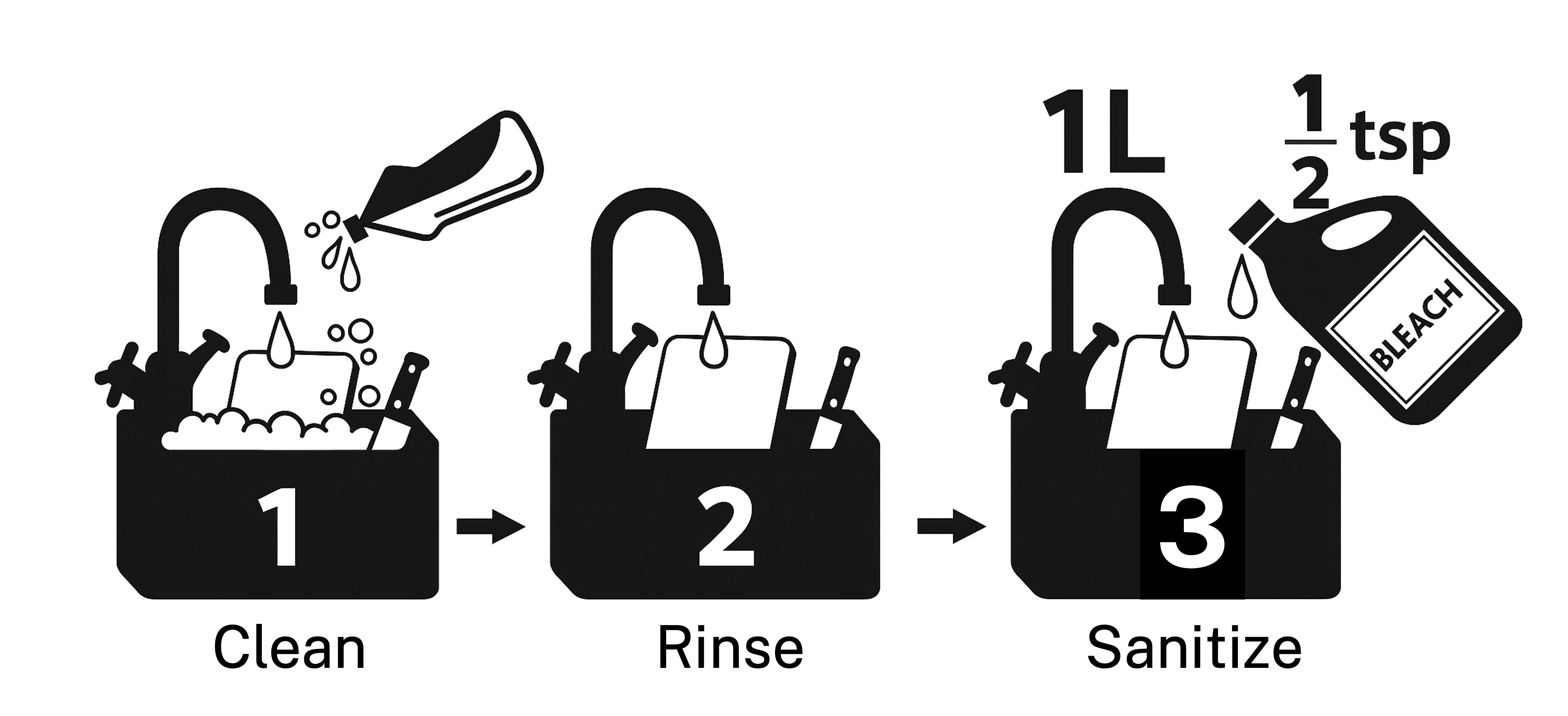
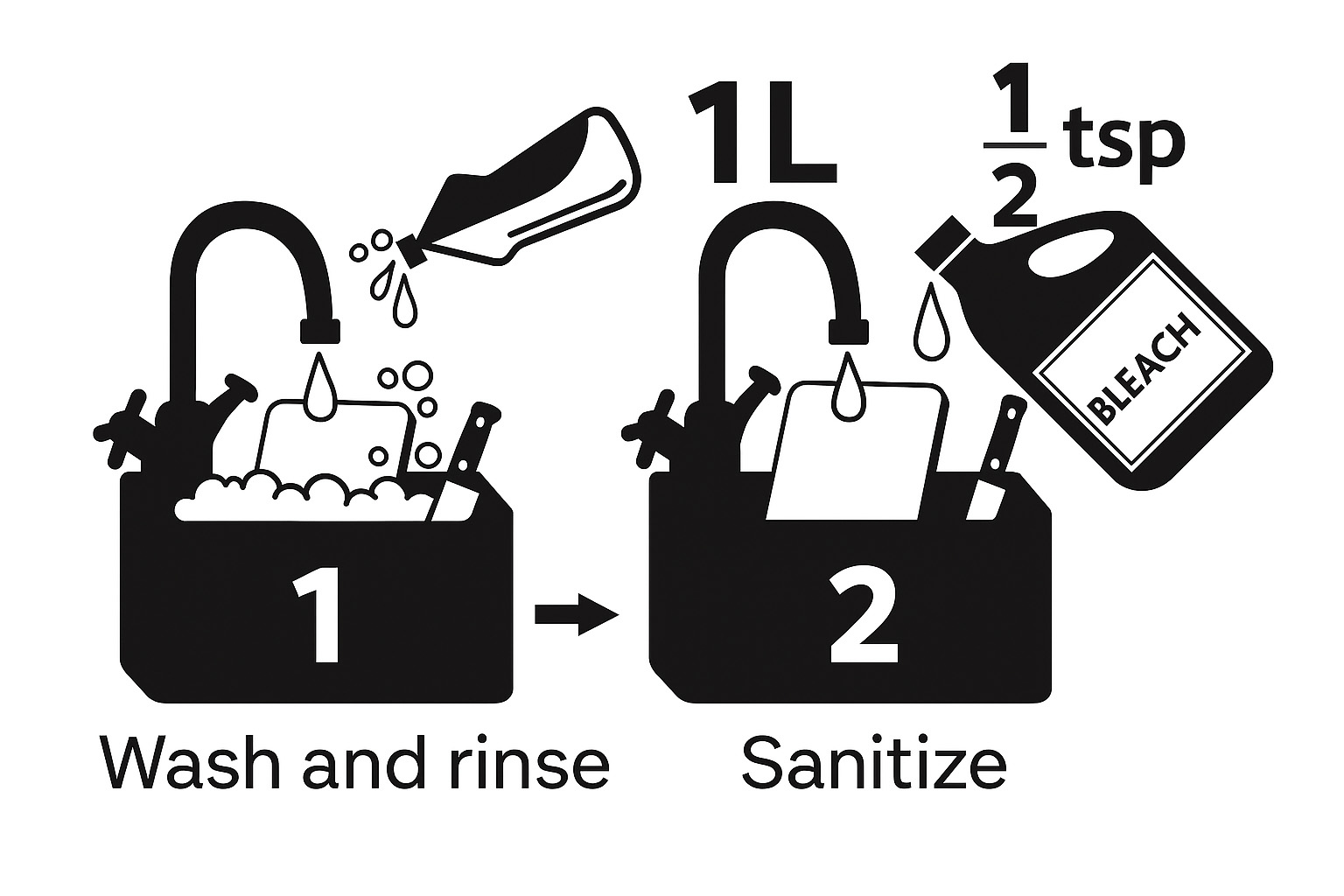
Here's how to clean and sanitize around your home or business. If an item cannot be immersed in water, it must be cleaned, rinsed, and sanitized in place using the same 4 steps.
- Wash the objects or surfaces with a detergent (like dish soap) and warm water.
- Rinse with clean warm water.
- Wipe, spray, or soak for 2 minutes with one of the sanitizers in the table below to kill germs.
- Air dry.
3 compartment sink method:
2 compartment sink method:
How to mix sanitizers
|
Sanitizer |
How to mix | Required sanitizer strength (concentration) |
Chlorine (chlorine bleach)
| 2 mL (½ teaspoon) regular household bleach per litre (4 cups) of water
or 30 mL (1 ounce or 2 tablespoons) regular household bleach per 15 litres (3.3 gallons) of water. | 100 ppm (parts per million)
|
Quaternary ammonium
(QUATS) | Follow manufacturer’s instructions for mixing and using QUATS. Product must have a drug identification number (DIN) from Health Canada. | 200 ppm for surfaces that touch food
|
| Iodine | Follow manufacturer’s instructions. | 12.5 to 25 ppm
|
| Accelerated Hydrogen Peroxide (AHP) | Follow manufacturer’s instructions for mixing. Product must have a DIN from Health Canada. | 0.5% AHP (with disinfectant claim) |
| Other products not containing these chemicals may also be effective sanitizers. Learn more about
using alternative chemical sanitizers. |
Businesses need to use the appropriate chemical test strips every day to make sure they are using the correct sanitizer strength (concentration).
Call your public health inspector if you have questions.
To learn more, contact Alberta Health Services
Environmental Public Health.