Blood tests
Blood testing is the only way to know if you have hepatitis B. Early testing is important to help find treatment or prevention strategies to keep you and others healthy and safe.
Blood test results can tell your healthcare provider if:
- you currently have hepatitis B
- you are protected from hepatitis B (because of getting a vaccine or from having a hepatitis B infection in the past)
- your liver has been injured
- you have other infections (your healthcare provider will share with you what they are testing for)
You will only have 1 needle for all these tests, but the lab will take several vials of blood for the tests. Blood tests are very common and safe.
If your results show that you have hepatitis B, your healthcare provider will order some extra blood tests and an
ultrasound of your abdomen to check the health of your liver. Your healthcare team will give you instructions to follow before your ultrasound to make sure that the test can take place as scheduled. You may be asked to eat a fat-free meal the evening before your ultrasound and to avoid eating anything 8 to 12 hours before your test. Follow all the instructions you receive.
Most people with hepatitis B don't have symptoms. You can have advanced liver disease even without symptoms. If you have hepatitis B, regular blood testing is key to understand how the virus is impacting your body.
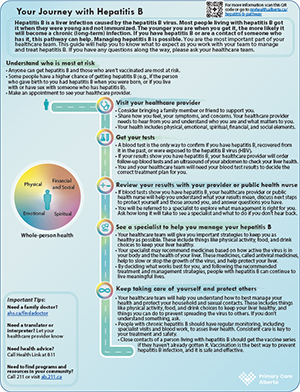
Hepatitis B Pathway
Download or print the
full patient pathway (PDF) and
summary (one-page PDF) to learn more about how to manage and treat hepatitis B.
Patient Pathway  Summary