If you have breast pain, see your healthcare provider to find out why you are having pain and learn ways to manage it.
It is important to know that breast pain is
not a common symptom of breast cancer.
Assessing breast pain
To assess your breast pain, your healthcare provider will ask you about your breast health and family history and then examine your breasts.
You may have a
mammogram,
ultrasound, or both tests to look for a possible cause for your pain.
Tell your healthcare provider:
- how bad the pain is (you may be asked to
rate your pain from 1 to 10)
- how long you have had the pain
- where the pain is
- what the pain feels like (sharp, hot, burning)
- what triggers the pain and what makes it worse
- what have you tried that seems to make the pain better
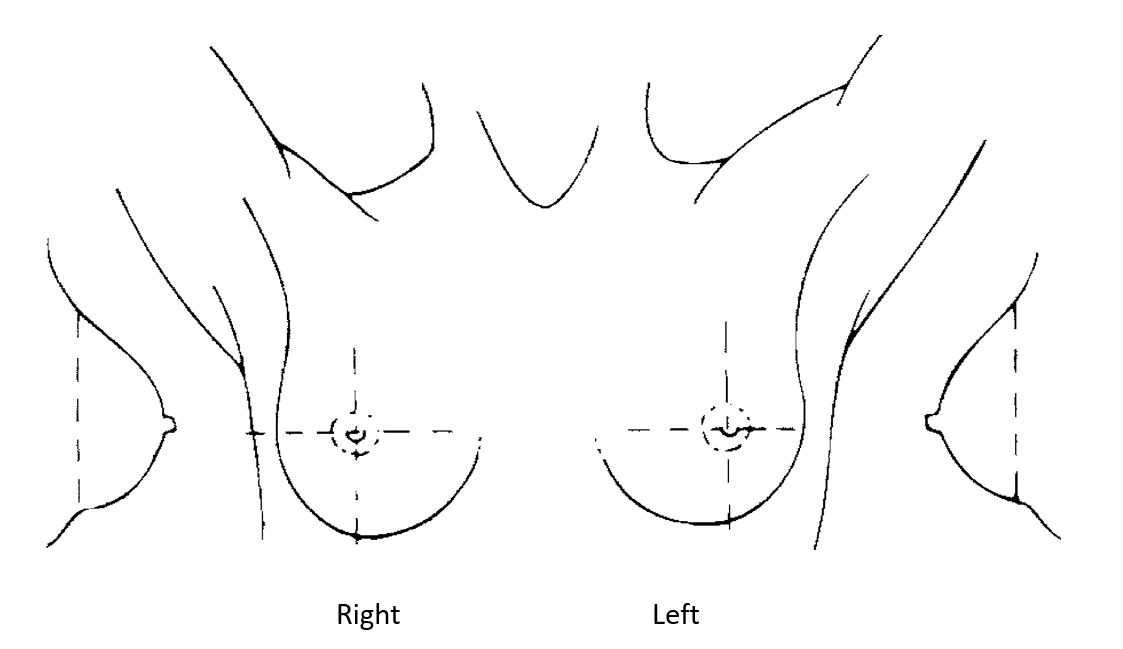
Breast map
Download and print the breast map below to help your healthcare provider assess your breast pain. Mark where you have pain in your breast or breasts. Mark whether the pain is only on 1 side, on both sides, or in the armpit. Mark if the pain moves from 1 spot to another.
 Breast pain calendar
Keeping a record of your breast pain for 3 to 4 months can help your healthcare provider find out what's causing your pain. Use this breast pain calendar to track your breast pain. You or your healthcare provider may notice your pain has a pattern or is linked to your lifestyle or menstrual cycle (periods).
Types of breast pain
There are different types of breast pain. Your healthcare provider's assessment will tell you what type of pain you have.
Cyclical breast pain
Cyclical breast pain is related to your menstrual cycle. It is the most common type of breast pain. It is usually caused by regular hormone changes and happens in both breasts. It is generally described as feeling heavy or sore. The pain gets worse 1 to 2 weeks before your period and goes away when your period starts or soon after.
Cyclical breast pain is more common in younger people and usually goes away at menopause.
Non-cyclical breast pain
Non-cyclical breast pain isn't related to your menstrual cycle. It may happen in 1 or both breasts. The pain may be sharp, burning, dull, achy, or throbbing.
Non-cyclical breast pain can have many causes, such as injury, cysts, inflammation, infection,
fibroadenomas, medicines, heavy breasts, or clogged milk ducts. Treatment depends on the cause of the pain.
Extramammary pain
Extramammary pain (also called chest wall pain or musculoskeletal pain) can often be mistaken for breast pain. This kind of pain affects the muscles and soft tissues of the chest, often after a lot of exercise, an injury, or when the area between the ribs and breastbone gets inflamed.
Chest wall pain usually has no pattern, can affect 1 or both sides of the chest, and can spread out from the armpit or go down your arm. Physical activity might make the pain worse. This pain often goes away in time.
It is still important to see your healthcare provider to check the pain, especially if you have a heart condition or have had surgery or an injury in that area.
Managing breast pain
The following tips can help manage breast pain.
Wear a bra that fits
One of the most common causes of breast pain is wearing a bra that doesn't fit well. A bra that fits and has good support can help with breast pain. Get tips for fitting your bra. Some specialty bra stores can help you find a bra that fits you best.
If you have breast pain, wear a bra without underwire because the firm wire can make your pain worse.
If breast pain wakes you at night, try wearing a sports bra to bed.
Talk to your healthcare provider about the medicines you take
The birth control pill, hormonal intrauterine device (IUD), or hormone therapy can cause cyclical breast pain or make it worse.
If you think your pain is from your birth control or hormone therapy, talk to your healthcare provider. They may be able to switch you to a lower dose or to a different brand.
Try alternative remedies
If you have cyclical breast pain with your menstrual cycle, there is some evidence that eating 2 tablespoons of ground flaxseed (not flaxseed oil) every day for 3 months can help.
If flaxseed doesn't help with cyclical pain, another option is a vitamin E supplement. Studies show that taking 200 to 400 IU of vitamin E daily for 2 months can help with breast tenderness.
There isn't enough evidence to recommend herbal supplements or other vitamins to treat breast pain. Some supplements such as ginseng may cause breast pain. Research shows that vitamins A and B6 don't help breast pain. Some vitamins such as vitamin A can even be toxic in large doses.
Use heat, cold, and medicine
If breast pain is not cyclical and is in a specific area (for example, because of a muscle or chest wall injury), you can use hot and cold compress and a topical anti-inflammatory gel (such as Voltaren or Emulgel). Do not put the gel on your nipple or areola.
Ask your pharmacist about non-prescription options. You can get a prescription for a stronger gel if you need it.
Try lifestyle changes
Even though studies haven't proven that caffeine causes breast pain, you may find having less caffeine helps.
Regular exercise and activities that lower stress may also help with breast pain.
Other treatments
Your healthcare provider may recommend other treatments or medicines for your breast pain depending on the cause. Examples include:
- removing fluid from a cyst in the breast
- taking antibiotics if you have a breast infection
- changing the dose of your birth control pill or hormone therapy
- changing or stopping a medicine that could be making the pain worse
- prescribing medicines to help balance your hormones
- physiotherapy for chest wall pain.
When to see your healthcare provider
See your healthcare provider if your breast pain:
- lasts longer than a few weeks
- is in 1 area of the breast
- is getting worse
- is spreading or changing
- is affecting your everyday activities
- is waking you up at night
- also comes with redness, a rash, or swelling