This information is for adults who have smoked, vaped, or used other commercial nicotine products in the last 30 days. These may include:
- cigarettes, cigars, shisha, or hookah
- chewing tobacco, dip, and snuff
- e-cigarettes (vape)
- nicotine gum and nicotine pouches
This information is not for people using traditional tobacco for ceremonial purposes or as a sacred medicine.
Here you will learn what to expect as you work with your healthcare provider to quit smoking, vaping, tobacco, or nicotine.
You might be
thinking about quitting. It’s never too late to quit or make a change. Every small step can improve your health.
Before you meet with your healthcare provider, you can
track your tobacco or nicotine use to better understand your habit.
Every time you use tobacco or nicotine, make a note of:
- the time
- how strong your craving is
- what triggered you to use
Help your healthcare provider understand your use
Your healthcare provider needs to understand what matters to you. They’ll ask you questions about how you use tobacco or nicotine to understand how they can help. For example:
- What tobacco or nicotine products do you use?
- Why do you want to quit or use less?
- How important is it to you to quit or use less?
- How do you think quitting might change your life?
Your healthcare provider may also talk with you about the health risks of smoking, vaping, or using other commercial nicotine products, as well as the benefits of quitting.
If you’re not ready to quit, your healthcare provider will respect your decision. They will offer you resources for when you are ready. And you can still think about using less tobacco or nicotine to help
lower your health risks.
Choose the right supports to quit or use less
If you’re ready to quit or use less, your healthcare provider will offer you advice and supports to reach your goal. These might include:
For many people, using more than one type of support really helps them quit smoking or using nicotine. You’ll choose the supports that are right for you.
To learn about free options to help you quit, watch the video
AlbertaQuits Support Services.
Follow-up and support
If you choose a date to quit tobacco or nicotine, follow up with your healthcare provider after 1 to 4 weeks. They can help you get through setbacks, adjust your medicine, and find different supports if you need them.
Learn more
No matter where you are on your quitting journey, you can learn more at
Tobacco Use, Smoking, and Vaping. If you have any questions, talk to your healthcare provider.
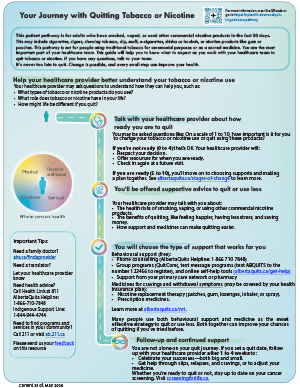
Quitting Tobacco or Nicotine Pathway
Download or print the
summary patient pathway (one-page PDF) to learn more about how to quit tobacco or nicotine.
Summary