Your child’s healthcare provider (doctor, nurse practitioner, speech-language pathologist, or early interventionist) will review your child’s history of behaviours. They may ask:
- what your child likes to do and if they have any favourite toys or foods
- what brings on behaviours, how often they happen, and how long they last
- how behaviours and triggers impact the things your child does every day, like preschool, childcare, hobbies, eating, and sleeping
- how your child’s behaviours impact you and your family and what strategies you use to deal with difficult behaviours
- what your child’s strengths and needs are, what their support system looks like, and what makes your child unique
Seeing a primary care provider (pediatrician, family doctor, or nurse practitioner) is always a good idea when you have questions about your child’s development.
A primary care provider’s assessment may include:
- medical and family history, such as siblings or aunts and uncles with autism
- growth measurement, such as height, weight, and head circumference
- child development questionnaires–they may ask you to fill this out on your own or may complete it with you during an office visit
- observations of your child’s play interests in the clinic
What should I watch for if my child is showing early signs of Autism?
Get early support for:
- talking concerns and how your child talks or interacts with others
- sleeping problems
- unusual diet
- early learning and developmental delays
Contact your child’s healthcare team if they have:
- increased aggressive behaviour
- meltdowns that become more frequent, more intense, or that make daily life very hard to manage
- increased food aversions, or changes in weight
- hearing and vision concerns
- can no longer do or say things that they could before
- difficult bowel movements
There are lots of things in your life that can impact your ability to manage your child’s health, like:
- challenges with money, housing, and access to transportation
- not enough support or help
- not enough sleep and self-care
- competing demands, like work and other children in the home
It’s important to talk about these things with your healthcare provider because they all play a role in your own and your child’s health and well-being.
You and your child are the most important part of your child’s healthcare team. If you do not understand what your child’s healthcare team is telling you, let them know right away. Be open and honest. You might say:
- “This is new to me. Could you please explain it slowly, using language that is easier to understand?”
- “Will you please write that down so that I can think about it more later?”
Learn more about
working with your healthcare team and
making the most of your appointment.
Call
911 any time if urgent medical attention is required
- if a meltdown becomes a medical emergency such as breathing problems or physical injury
- if your child has wandered off, especially near traffic, water, or unfamiliar surroundings
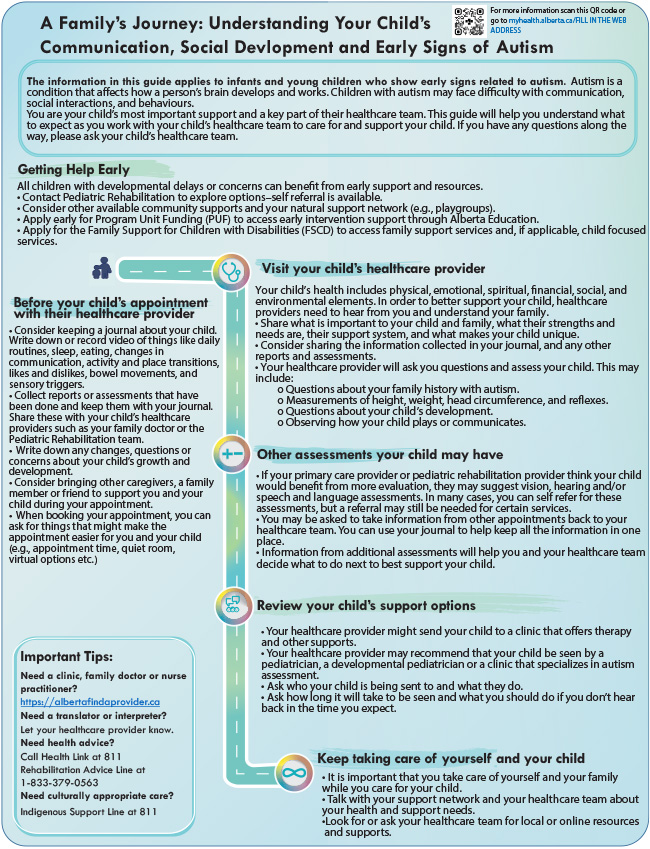
Autism Pathway
Download or print the
full patient pathway (PDF) and
summary (one-page PDF) to learn more about autism and what to expect as you care for and support your child.
Patient Pathway  Summary