Any child can benefit from assessments and screening to meet their individual health needs and your family goals. With your permission, your child’s primary care provider may send your child for multiple assessments or to a place where many assessments can be done in one place.
Information from additional assessments will help you and your healthcare team decide what to do next to best support your child. If you decide to access these assessments privately, some may have a fee (cost).
- Vision assessments: Sometimes vision problems present like autism signs, like being sensitive to bright light, problems making eye contact, or not responding to gestures like pointing.
- Hearing assessments: Hearing tests help to tell if hearing problems may be causing developmental delays, especially those related to social skills and language use.
- Speech and language assessments: These tests might be done to see how your child communicates and understands.
A note for parents and caregivers:
Remember to bring your child’s journal to all appointments. Keep assessment and health records with your journal.
It’s important to know what your child’s healthcare team finds out. Take time to discuss findings and recommendations.
Medical terms can be hard to understand. Ask your child’s healthcare provider for explanations and examples to make sure you fully understand. You might ask:
- “What does this mean for my child?”
- “Is there a current concern? If so, what will I do next?”
You may be able to see your child’s results and health information using secure online tools:
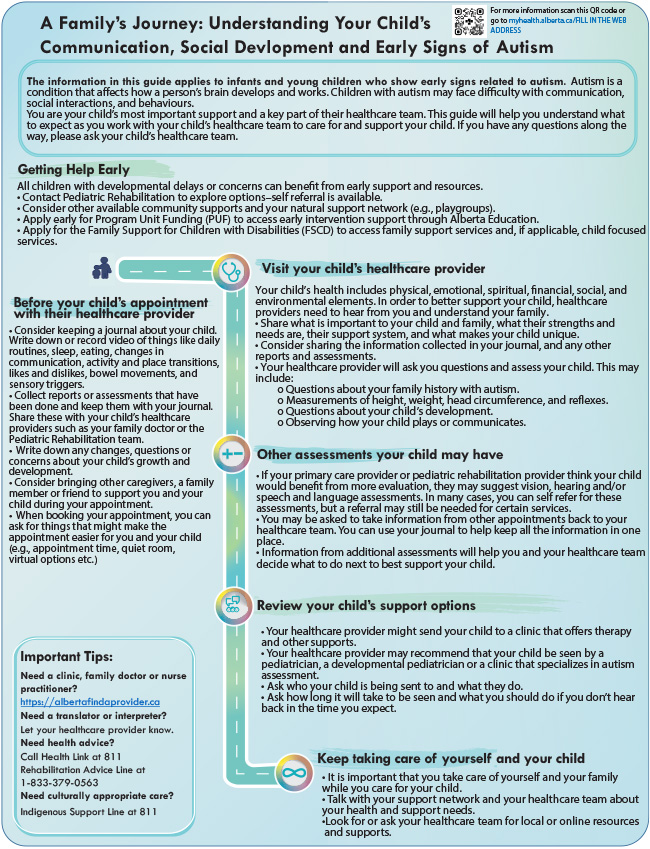
Autism Pathway
Download or print the
full patient pathway (PDF) and
summary (one-page PDF) to learn more about autism and what to expect as you care for and support your child.
Patient Pathway  Summary