If you have female urinary organs, this guide will help you to know what to expect as you work with your healthcare team to manage and treat lower urinary tract symptoms.
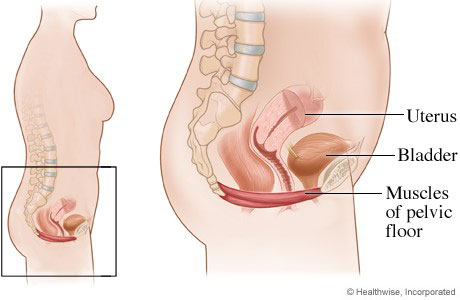
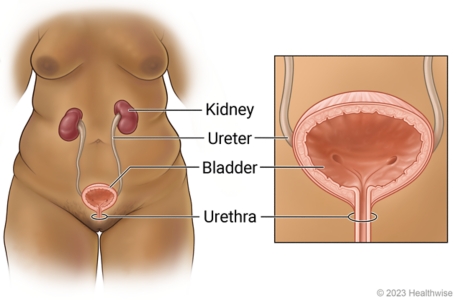
You will have your own unique journey with lower urinary tract symptoms. How you move through your journey, the number of visits with your healthcare team, the steps you will take, and the order you take them in will depend on your needs. You will make decisions in partnership with your healthcare team. Always follow your healthcare team’s advice.
What are lower urinary tract symptoms?
Lower urinary tract symptoms are problems that affect how you urinate (pee). Thinking of the symptoms as 3 different groups can help your healthcare provider understand why your symptoms are happening.
-
Storage symptoms:
- sudden, strong urges to pee (urgency)
- needing to pee often (frequency)
- waking at night to pee (nocturia)
- leaking urine (incontinence)
- painful lower belly or bladder
-
Peeing (voiding) symptoms:
- difficulty starting to pee (hesitancy)
- slow or interrupted urine stream
- straining to pee
- pain or burning when you pee
-
After peeing symptoms:
- dribbling after finishing
- feeling like your bladder isn't empty
You may have symptoms that cross several or all these groups.
Lower urinary tract symptoms are often linked to aging or menopause, but they can affect people of all ages.
If you recently had a baby and started leaking urine after a vaginal delivery, talk to your healthcare provider. Getting help early often helps to improve your treatment and prevents symptoms from getting worse.
These symptoms can be hard to talk about. You and your healthcare team might use different words or you may feel uncomfortable with some words. Different ways to talk about peeing include pee, urinate (as well as urine and urination), voiding, or passing urine. You can choose whichever words you prefer. Your healthcare team is there to support you. If you’re ever confused by words that your healthcare provider uses, ask them to explain what they mean.
There are many different causes and risk factors that can contribute to lower urinary tract symptoms, including certain health conditions, medicines, family history, personal habits, diet, and stress. Your healthcare provider will consider these many different things when working with you to understand why you are having symptoms.
Impact of symptoms
Lower urinary tract symptoms can have a big impact on your quality of life. Symptoms like leaking urine, needing to urinate often, or waking up during the night to urinate can make everyday activities harder. Lower urinary tract symptoms might affect your life through:
-
Sleep disruptions: If you wake up multiple times during the night to urinate, it can affect how well you sleep. Poor sleep may make you feel tired and less focused during the day.
-
Embarrassment or stress: Problems like leaking urine or needing to rush to the bathroom can be stressful or embarrassing, especially in public or social situations. This can lead to feelings of frustration or anxiety.
-
Limits on activities: Frequent bathroom trips or worrying about accidents can make it harder to enjoy activities you used to like, such as exercising, travelling, or going out with friends and family.
-
Difficulty with work or daily tasks: Constantly needing to go to the bathroom can make it harder to focus at work or finish everyday tasks, like cooking or running errands.
-
Impact on relationships: Lower urinary tract symptoms may be difficult to talk about, impact intimacy, or cause stress with your partner or loved ones.
-
Cost: Needing to buy absorbent products or do more laundry due to urine leakage can cause financial strain.
Whole-person health
The whole-person health approach will help you and your healthcare team better manage your health condition.

Whole-person health draws from the teachings of the medicine wheel. It means thinking about all parts of your health and wellness:
- physical
- financial and social
- spiritual
- emotional
These parts are all connected and impact each other. It’s important to be aware of your personal needs in each part and to share that information with your healthcare team. Your healthcare team needs to understand who you are and what matters to you. Here are some examples of things you may want to talk about with your healthcare provider:
- “Because of urine leaks, it is hard for me to exercise like I want.” (physical)
- “I find myself avoiding activities that are important to me because I’m scared I’ll have an accident in public.” (financial and social)
- “It is important in my culture to be clean. I don’t feel clean due to my symptoms.” (spiritual)
- “I feel embarrassed about how I leak urine and have no one to talk to.” (emotional)
Support and resources
- If you need a family doctor or clinic accepting new patients near you, visit
Alberta Find a Provider.
- If you need a translator, let your healthcare provider know.
- If you need health advice any time, day or night, call Health Link at 811.
- If you need to find programs and services in your community, call or text 211 or visit
211 Alberta.
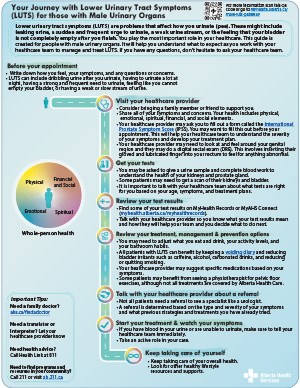
Lower Urinary Tract Symptoms (Female) Pathway
Download or print the
full patient pathway (PDF) and
summary (one-page PDF) to learn more about how to manage and treat lower urinary tract symptoms.
Patient Pathway  Summary