As you try different treatment options, remember that if something doesn’t work the way you thought it would, think about other options. Talk with your healthcare provider to find what will work for you.
Watch for changes in your symptoms:
- Are they worse or better?
- Do you have new symptoms?
- Are there any side effects that are causing you problems?
Consider continuing to use a bladder diary to see how things change over time and to make it easier to find out what works for you.
Clarify with your healthcare team what kind of follow-up communication to expect. Connect with your healthcare team whenever you:
- have questions
- notice your symptoms getting worse
- have problems with your medicine
- haven’t gotten test results or heard back about an appointment in the time you had agreed to
Get medical help now
Some symptoms can be a sign that something else is going on that needs attention or treatment right away. If you have any of these symptoms, make sure to tell your healthcare team right away or call Health Link at 811:
- symptoms of urinary tract infection (like fever and chills, blood in urine, pain in your lower back and pelvis, and generally feeling unwell)
- new or worsening lower back, belly, or pelvic pain
- being unable to urinate at all, having a hard time to urinate, or feeling like your bladder doesn’t empty fully when you urinate
- new swelling in your feet and ankles
- post-menopausal bleeding (having a period or vaginal bleeding 12 months after your regular periods have stopped)
- unexplained weight loss, loss of appetite, and night sweats
- unexplained mass or lump on your abdomen or pelvis
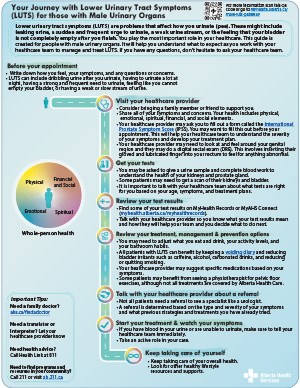
Lower Urinary Tract Symptoms (Female) Pathway
Download or print the
full patient pathway (PDF) and
summary (one-page PDF) to learn more about how to manage and treat lower urinary tract symptoms.
Patient Pathway  Summary