It can sometimes feel uncomfortable to discuss things that you find hard to do or can no longer do, like doing up buttons or holding a fork. Your healthcare provider knows it can be hard to talk about these things, and they are there to support you. Seeking support early can help you manage your symptoms.
Assessment
Many health conditions can cause pain in your hand and wrist. To help determine what is causing your symptoms, your healthcare provider may ask you about:
- your symptoms and how they impact your day-to-day life and things like your job, hobbies, and relationships
- things you have stopped doing, or things you do less often than before, because you want to avoid symptoms
- the emotional impacts of your symptoms (for example, are you feeling grief or frustration)
- where on your fingers, thumbs, or wrists you are having symptoms
- what makes your symptoms better or worse, and what has worked for you to manage your symptoms
- if you have ever had a hand or wrist injury
- whether your job or activities require you to use your hands a lot
- whether anyone else in your family has hand and wrist osteoarthritis
Your healthcare provider will also look at your hands to check for any changes, pain, range of motion, and stiffness.
Other things to talk about with your healthcare provider
Ask your healthcare provider if there are things you can do to help prevent further joint damage.
Your healthcare provider may also be able to tell you about education or support programs for pain that are available in your community or online.
There are lots of things in your life that can impact your ability to manage your health, like problems with money, access to transportation, and childhood experiences. It’s important to talk about these things with your healthcare provider because they all play a role in your health.
Making the most of your appointment
If you don’t understand what your healthcare team is telling you, let them know right away. Be open and honest. You might say:
- “It sounded like you said that I should… Did I understand that correctly?”
- “Can you show me a picture or model to help me understand?”
Learn more about working with your healthcare team and making the most of your appointment.
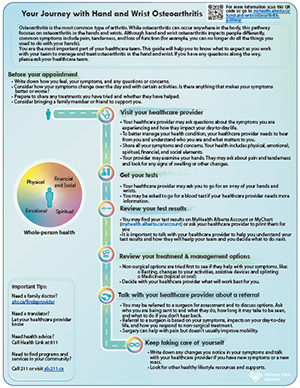
Hand and Wrist Osteoarthritis Pathway
Download or print the
full patient pathway (PDF) and
summary (one-page PDF) to learn more about how to manage and treat osteoarthritis in the hand and wrist.
Patient Pathway  Summary