This guide will help you to know what to expect as you work with your healthcare team to manage and treat iron deficiency anemia.
You will have your own unique journey with iron deficiency anemia. How you move through your journey, the number of visits with your healthcare team, the steps you will take, and the order you take them in will depend on your needs. You will make decisions in partnership with your healthcare team. Always talk with your healthcare team and follow their recommendations for your specific care.
What is iron deficiency anemia?
Iron deficiency anemia means that your body doesn't have the iron it needs to make enough red blood cells. With fewer and smaller red blood cells, your blood isn't able to carry enough oxygen to the cells in your body. This can make you feel weak and tired or dizzy.
Iron deficiency anemia is caused by low levels of iron in your body. You may have low levels of iron in your body because:
- you're not getting enough iron in your diet
- your body isn't absorbing enough iron, which can happen if you have celiac disease or if you've had part of your stomach or small intestine removed
- you have persistent bleeding, like heavy monthly periods or bleeding inside your body from stomach ulcers, hemorrhoids, or cancer
Bleeding inside the body is the most common cause of iron deficiency anemia in men, and in women after menopause.
Your healthcare provider will try to find the cause of the anemia and treat that problem. Most people start to feel better after treatment begins. If you think you have anemia, see your healthcare provider. Do not try to treat yourself.
Whole-person health
The whole-person health approach will help you and your healthcare team better manage your health condition.
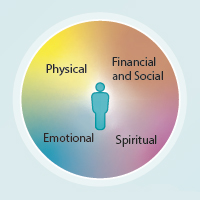
Whole-person health draws from the teachings of the medicine wheel. It means thinking about all parts of your health and wellness:
- physical
- financial and social
- spiritual
- emotional
These parts are all connected and impact each other. It's important to be aware of your personal needs in each part and to share that information with your healthcare team. Your healthcare team needs to understand who you are and what matters to you. Here are some examples of things you may want to talk about with your healthcare provider:
- "Why do I feel so tired even after resting?" (physical)
- "How can I eat iron rich foods if groceries are expensive?" (financial and social)
- "It's important that my religious practice of fasting is respected and brought into my care." (spiritual)
Support and resources
- If you need a family doctor or clinic accepting new patients near you, visit
Alberta Find a Provider.
- If you need a translator, let your healthcare provider know.
- If you need health advice any time, day or night, call Health Link at 811.
- If you need to find programs and services in your community, call or text 211 or visit
211 Alberta.
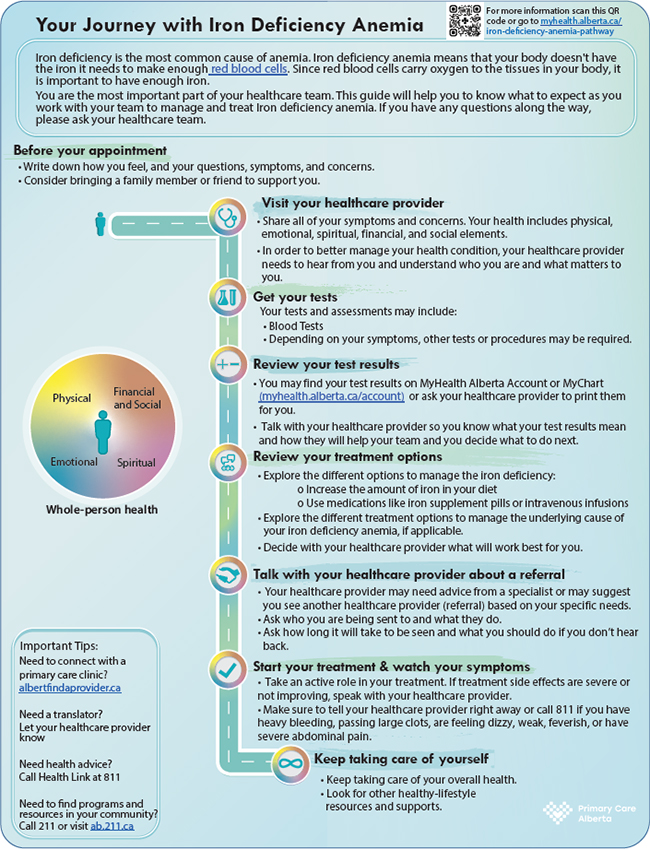
Iron Deficiency Anemia Pathway
Download or print the
full patient pathway (PDF) and
summary (one-page PDF) to learn more about how to manage and treat iron deficiency anemia.
Patient Pathway  Summary