To manage your iron deficiency, you and your healthcare team can:
- increase the amount of iron in your diet
- work together to explore medicine options
- manage the underlying cause of your iron deficiency anemia, if there is one
Do not try to treat yourself.
- Taking iron pills yourself could delay the diagnosis of a serious problem, such as a bleeding ulcer or colon cancer.
- If your anemia is not caused by iron deficiency, taking iron pills won't relieve the anemia. And it may cause you to have too much iron in your blood or have iron poisoning.
Making dietary changes
Eat foods with a lot of iron such as:
- meat, poultry, wild game, and shellfish
- eggs
- dried beans and lentils
- molasses
- nuts
- dried fruits like raisins, dates, and apricots
For more information on how to get more iron in your diet, visit:
To talk with a registered dietitian about nutrition and getting enough iron, call Health Link at 811 or visit
811 Health Link. To see a list of services provided by dietitians in Alberta, visit
Nutrition Services.
Medical treatment options
Iron supplement pills
If you have iron deficiency anemia, your healthcare provider may suggest taking iron supplement pills. Taking iron supplement pills and getting enough iron from your food will correct most cases of iron deficiency anemia.
You may start to feel better after a few weeks of taking iron supplement pills. But don't stop taking them, even if you feel better. You'll need to keep taking the pills for several months to build up the iron in your body.
Intravenous (I.V.) infusion
If you have problems with iron supplement pills, you may need to get iron by an intravenous (I.V.) infusion given into your bloodstream. Iron infusions are done at clinics at a hospital or in the community.
Blood transfusion
If your iron deficiency anemia is severe, your healthcare provider may recommend a
blood transfusion.
Prevention
You can help prevent iron deficiency anemia by eating iron-rich foods every day. These include meats, vegetables, and whole grains. Learn more about
getting enough iron and the recommended daily amount of iron from food.
To help prevent iron deficiency anemia in children, make sure to follow dietary recommendations. Download
iron foods for children ages 1 and up for more information.
During pregnancy, you can take prenatal vitamins that include iron.
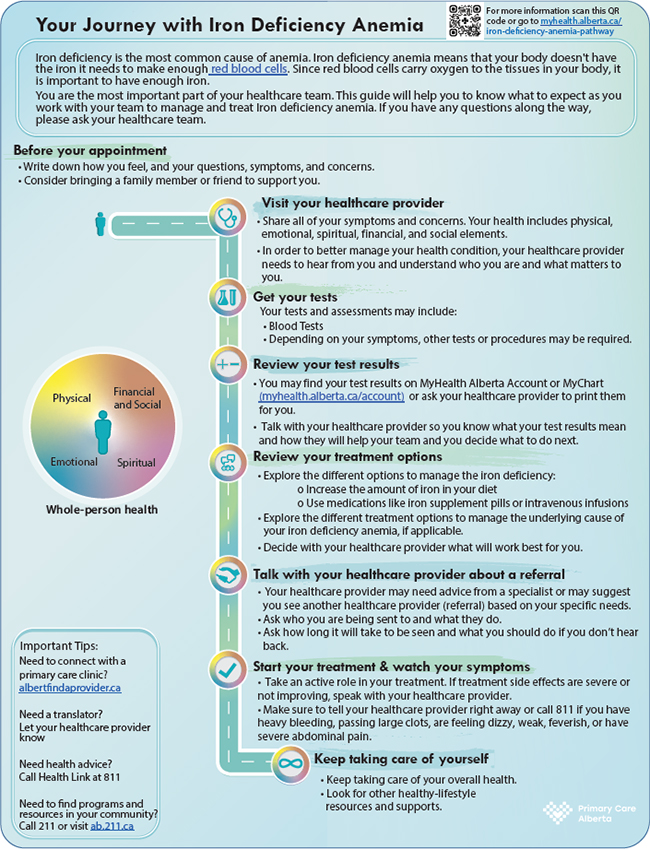
Iron Deficiency Anemia Pathway
Download or print the
full patient pathway (PDF) and
summary (one-page PDF) to learn more about how to manage and treat iron deficiency anemia.
Patient Pathway  Summary