As you try different treatment and prevention options, remember that if something doesn’t work the way you thought it would, think about other options. Talk with your healthcare provider to find what will work for you.
If you have a change in symptoms or notice new symptoms, consider writing down what you are feeling, the date and time the symptoms started, and what you were doing when they began.
Watch for symptoms including:
- burning feeling when you urinate (pee)
- feeling like you have to urinate often
- feeling like you have to urinate right away when you get the urge
- leaking urine (incontinence)
- not being able to fully empty your bladder
- vaginal dryness
Watching your symptoms is important. Call your healthcare provider or Health Link at 811 if you have any concerns. You might feel like you don’t want to bother your healthcare team, but no detail is too small to share. If it matters to you, it will matter to your healthcare team.
Contact your healthcare provider
Contact your healthcare provider if you:
- think there might be blood in your urine
- have fever or chills
- have pain in your lower belly (abdomen) or back
- have UTI symptoms that don’t get better within 2 to 3 days after starting treatment
- are pregnant and think you might have a UTI
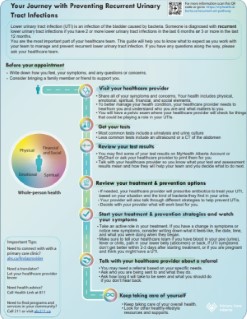
Recurrent Lower Urinary Tract Infection (UTI) Pathway
Download or print the
full patient pathway (PDF) and
summary (one-page PDF) to learn more about how to manage and treat GCA.
Patient Pathway  Summary