Hot flashes and night sweats
To manage hot flashes and night sweats, research shows the following strategies are effective:
There are other common strategies that people use to cope with hot flashes and night sweats. Examples include avoiding certain foods, dressing in breathable fabrics, and using fans and other cooling products. Although these strategies are safe to try, they are not supported by research.
Vaginal dryness, changes to urination, and other genital and urinary symptoms
Low levels of estrogen in the pelvic area can result in vaginal dryness, painful sex, burning, urinary tract infections, and irritation in the genital area. To manage symptoms affecting your vagina, vulva, and urinary system:
- Use water-based or silicone-based vaginal lubricants when you have sex. Examples of non-irritating lubricants include Uberlube, Astroglide, Probe, Slippery Stuff, and K-Y Liquid. Avoid lubricants that have flavours, colours, “warming lubricants”, and lubricants that contain solvents or preservatives like parabens and propylene glycol. Before using vaginal lubricants, test a small amount on your skin and watch for a reaction for 24 hours.
- If you have vaginal dryness, try non-prescription vaginal moisturizers like Good Clean Love, RepaGyne, Replens, Cleo, Zestica, and Gynatrof. Before using a vaginal moisturizer, test a small amount on your skin and watch for a reaction for 24 hours.
- You do not need soap to clean your vulva and area around your vagina. Rinse your skin with warm water and pat the area dry with a soft towel. If you do need a cleanser, choose a gentle cleanser that is labelled hypoallergenic such as Cetaphil or Aveeno.
- Avoid spending a long time in hot water.
- Do not use products that may cause vaginal irritation like bar soap, shower gel, products with essential oil, and bubble bath.
- Try a shallow bath with warm water and unscented Epsom salts.
- If you use menstrual products, use 100% cotton pads, tampons, or a menstrual cup.
- Wear 100% cotton underwear and loose clothing.
- Do not wear underwear when sleeping.
- Consider trying pelvic floor exercises (kegel exercises).
- Consider pelvic floor physiotherapy. Many people need help learning how to do pelvic floor muscle training properly. Seeing a pelvic floor physiotherapist is a great way to get the support you need. Find pelvic floor physiotherapy resources near you, attend a free pelvic health physiotherapy webinar, or call the Alberta Health Services Rehabilitation Advice Line at 1-833-379-0563 for help finding a clinic.
Your healthcare provider may also recommend a local menopause hormone therapy like vaginal estrogen or another medicine to help manage your genital and urinary symptoms.
Learn more about:
Mood, sleep, and memory symptoms
Perimenopause and menopause can bring emotional and psychological changes. Many people also find it harder to get a good sleep during this phase of life. To manage mood, sleep, and memory challenges:
- Consider trying cognitive behavioural therapy to help with mood and sleep symptoms.
- Identify what is stopping you from getting a good sleep.
- Practice good sleep habits, like using your bedroom only for sleep and sex, having a calming sleep routine, avoiding screens before bed, and avoiding caffeine for at least 4 to 6 hours before sleeping.
- Your healthcare provider may recommend medicines like menopause hormone therapy, anti-depressants, or other medicines.
Not all changes to sleep and mood are because of perimenopause or menopause. Talk with your healthcare provider if you have any mental health concerns.
Sexual symptoms
Perimenopause and menopause can cause a decreased desire for sex (lower libido) and discomfort or pain during sex. To manage these symptoms:
- Communicate openly with your partner and increase non-sexual physical affection.
- Practice pelvic floor exercises (kegel exercises).
- Use water-based vaginal lubricants when you have sex.
- Try non-prescription vaginal moisturizers if you are experiencing vaginal dryness.
- Avoid using bubble bath, strong soaps, and other products that may cause vaginal irritation.
- Consider sex therapy.
Your healthcare provider may recommend vaginal menopause hormone therapy, non-hormonal medicines, or pelvic physiotherapy to manage sexual symptoms.
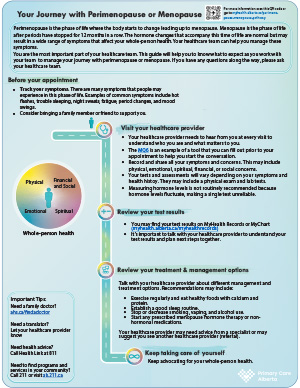
Perimenopause and Menopause Pathway
Download or print the
full patient pathway (PDF) and
summary (one-page PDF) to learn more about how to manage and treat perimenopause and menopause.
Patient Pathway  Summary